 How-to
How Can You Stop Hair Thinning Naturally?
Last Updated: November 29, 2026
Quick Summary
You can stop hair thinning naturally by first finding its cause, then protecting the scalp and reducing breakage with consistent home care. Rosemary oil has moderate human-trial evidence, with small randomized trials reporting hair-count increases comparable to 2% minoxidil over six months. Gentle scalp massage, mild shampoo, and avoiding tight styles and heat tools support the routine.
- Hair thinning has several drivers, including hormonal shifts, nutritional gaps, stress, genetics, and harsh styling.
- Dilute rosemary oil in a carrier oil and patch-test before applying it to the scalp.
- A small trial reported increased hair thickness from several minutes of daily scalp massage over 24 weeks.
- Visible density changes are usually first measurable at months 4 to 6 of a consistent routine.
- See a clinician for rapid or patchy shedding, scalp pain, or thinning that keeps worsening.
Table of Contents
- How Can You Stop Hair Thinning Naturally?
- Find the Cause Before You Pick a Remedy
- How to Stop Hair Thinning Naturally at Home
- Natural Remedies Ranked by Evidence
- How to Regrow Thinning Hair Female: Hormones, Life Stages, and What Helps
- Vitamins for Thinning Hair: What the Evidence Supports
- How Long Does It Take for Hair to Regrow?
- When Natural Approaches Are Not Enough
- Book a Trichoscopy Consultation to Confirm Your Cause
- Frequently Asked Questions
How Can You Stop Hair Thinning Naturally?
Hair thinning is a gradual reduction in hair density that happens when follicles shrink, the growth cycle shortens, or more strands shed than regrow. Many women notice this pattern after trying shampoo after shampoo with no real change. The key lesson: you cannot treat hair thinning well until you know what is driving it. Below, we walk through the causes, the remedies with the strongest support, and a realistic routine you can start at home. We also explain when self-care stops being enough.
Find the Cause Before You Pick a Remedy
Most people pick a remedy first and look for a cause later. That order is backwards. Hair thinning has several common drivers, and each one responds to different things:
- Hormonal shifts such as thyroid changes, pregnancy, menopause, or polycystic ovary syndrome
- Nutritional gaps, especially low iron, protein, or vitamin D
- Stress-related shedding, which often shows up weeks after a stressful event
- Genetics, which tends to cause gradual, all-over thinning
- Scalp problems like inflammation or flaking
- Harsh styling, tight hairstyles, and chemical treatments
A common mistake is assuming stress when the real issue may be a nutritional gap. A blood panel and a scalp exam can help clarify the cause. If you notice sudden heavy shedding, patches of missing hair, or scalp pain, see a clinician promptly rather than waiting it out.
How to Stop Hair Thinning Naturally at Home
You can support hair regrowth at home by protecting the scalp, reducing breakage, and removing habits that strain follicles. Consistency matters more than any single product. Think of it as a routine, not a quick fix.
Scalp Massage and Gentle Hair Care
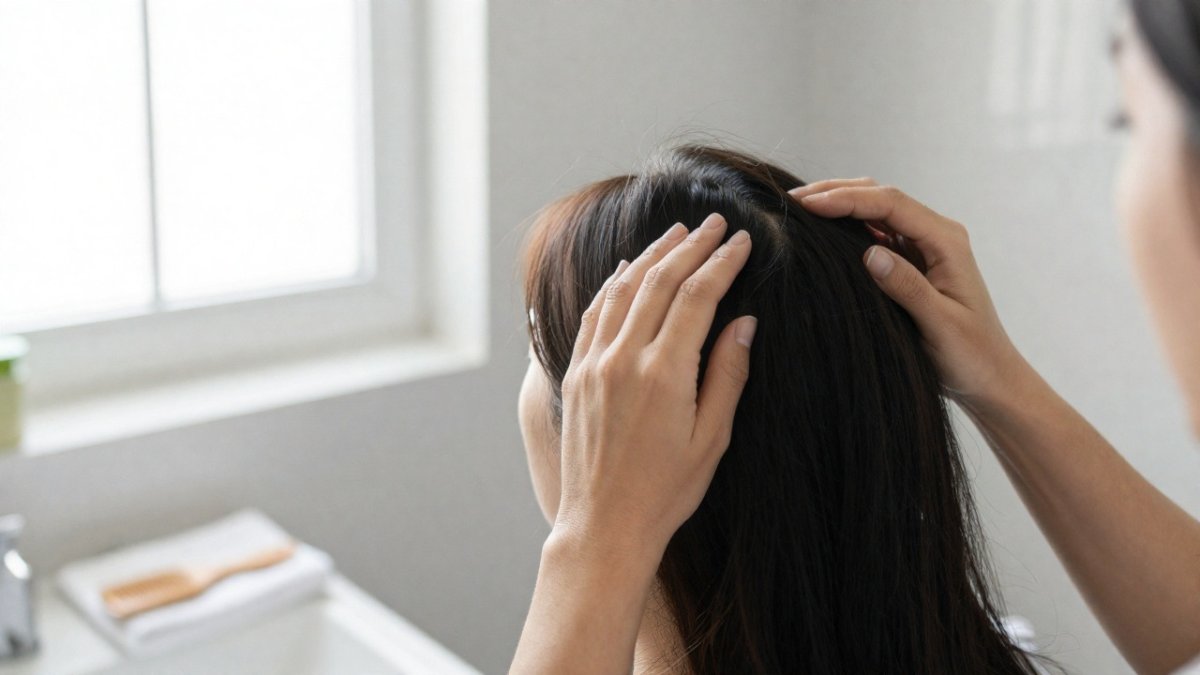
Scalp massage is a simple habit that many people use as part of their hair routine. Gentle pressure with the fingertips is generally considered a low-effort practice; firm pressure can irritate the scalp.
For daily care:
- Wash with a mild shampoo and avoid very hot water
- Skip tight ponytails, braids, and clips that pull
- Let hair air-dry when you can, and limit heat tools
- Use a wide-tooth comb on damp hair
- Avoid harsh chemical treatments while shedding is active
Natural Remedies Ranked by Evidence
Not all home remedies are equal. Some have been tested in human clinical trials with measurable hair-count outcomes; others rest on laboratory findings, traditional use, or anecdote. The ranking below separates those tiers so you can judge what a remedy can realistically do, and what it cannot.
| Remedy | Evidence Tier | What the Research Shows | Best For | Watch Out For |
|---|---|---|---|---|
| Rosemary oil | Moderate, human trials | Small randomized trials compared topical rosemary oil with 2% minoxidil over six months and reported comparable hair-count increases, with less scalp itching in the rosemary group. | Early-stage androgenetic thinning; scalp stimulation | Skin irritation and contact dermatitis; always dilute in a carrier oil before applying |
| Scalp massage | Moderate, human trials | A small trial using standardized scalp massage for several minutes daily over 24 weeks reported increased hair thickness; the proposed mechanism is mechanical stimulation of the follicle and improved blood flow (pubmed.ncbi.nlm.nih.gov). | Circulation support, stress relief, adjunct to other care | Too much pressure can irritate the scalp; stop if tenderness develops |
| Caffeine (topical) | Emerging, lab and early human data | Laboratory studies show caffeine counteracts the follicle-shrinking effect of dihydrotestosterone (DHT) in cultured follicles; human trial data are limited and mostly product-sponsored. | Follicle stimulation in early thinning | Not for broken or inflamed skin; evidence is weaker than marketing suggests |
| Aloe vera | Limited, lab and traditional | Laboratory work suggests soothing and anti-inflammatory properties; little direct human hair-density data. | Calming an irritated, flaky scalp | Allergy risk; patch-test first |
| Coconut oil | Limited, lab and traditional | Studies focus on reducing protein loss from hair shafts, which helps brittle hair; it does not treat follicle-driven thinning. | Dry, brittle hair and breakage | Can clog pores and worsen scalp acne for some |
| Onion juice | Limited, small human studies | A small study reported regrowth in a majority of participants with patchy hair loss over weeks; the smell and irritation limit real-world use. | Traditional use in patchy thinning | Strong odor; contact irritation |
| Fenugreek | Limited, traditional | Traditional use for scalp health; minimal clinical data on hair density. | Traditional scalp care | Allergic reactions in people sensitive to legumes |
| Green tea | Early, lab data | Antioxidant compounds show follicle-supporting activity in laboratory models; little direct human hair data. | General antioxidant support | Limited evidence for hair-specific outcomes |
As a general safety matter, essential oils should be diluted and patch-tested before scalp use, and people with sensitive skin should introduce one new product at a time. Check with a clinician before using essential oils if you take prescription medications or have a diagnosed scalp condition.
Watch out: a remedy that irritates the scalp can cause more shedding than it prevents, so stop any product that produces redness, burning, or increased shedding and reassess.
How to Regrow Thinning Hair Female: Hormones, Life Stages, and What Helps
Female hair thinning often follows hormonal shifts. Pregnancy, menopause, thyroid changes, and conditions like polycystic ovary syndrome can all affect the hair-growth cycle. The right approach depends on your life stage and lab results.
For many women, a plan may combine:
- A proper hormonal and nutritional workup
- Gentle hair-care practices
- Stress management and sleep
- Targeted treatment for any diagnosed condition
If your thinning is all over rather than a clear patch, that pattern is common in female hair loss and worth a clinical look. Trichoscopy is a scalp magnification technique that can help a clinician assess follicle health (pubmed.ncbi.nlm.nih.gov).
Vitamins for Thinning Hair: What the Evidence Supports
Certain vitamins and minerals matter for hair growth, but more is not better. The ones most linked to healthy hair include:
- Iron, important for women, especially with heavy periods
- Vitamin D, which supports the follicle cycle
- B vitamins, including biotin
- Zinc, involved in tissue repair
- Protein, the building block of hair
Biotin gets a lot of attention, yet many people get enough from food. Supplements are generally most relevant when a deficiency exists, and high doses without a known gap can cause side effects. Check with a clinician before starting any supplement.
How Long Does It Take for Hair to Regrow?
Hair regrowth is slow. The hair-growth cycle includes growth, transition, and rest phases, and changes in density usually take time to become visible. That biology sets much of the timeline.
A realistic sequence looks like this:
- Weeks 1-4: shedding may briefly increase when you start a new scalp routine or stop a harsh habit; this is often temporary and not a sign of failure.
- Months 2-3: early changes in shedding volume become noticeable; new growth at the hairline or part may appear as short "baby hairs."
- Months 4-6: visible density changes are usually first measurable; this is the earliest point at which most practitioners would judge whether a remedy is working.
- Months 6-12: the clearest picture of whether a routine is helping; some approaches, including minoxidil, are typically evaluated at six months or later.
To track progress objectively rather than by feel:
- Take photos every four weeks in the same room, lighting, angle, and hairstyle, with the part in the same place.
- Count shed hairs on wash days using a consistent method, for example, collect hair from the drain and comb after washing and note the number.
- Use a simple log to record the date, the count, and any routine changes so you can compare like with like.
- Measure the part width or hairline position with a ruler at the same landmarks each month.
Switching products every few weeks makes it hard to know what is working, so giving each change a consistent trial period can help you judge it more clearly.
If shedding is rapid, patchy, or accompanied by scalp pain, do not wait out the timeline, those patterns warrant a clinical evaluation rather than a home trial.
When Natural Approaches Are Not Enough
Home remedies have limits. If thinning continues despite a good routine, or if you have a diagnosed condition like androgenetic alopecia or another form of alopecia, clinical care matters. Signs to seek help include:
- Rapid or patchy shedding
- Scalp pain, itching, or redness
- Thinning that keeps worsening
- Signs of a hormonal or nutritional problem
A trichoscopy consultation can confirm the cause and guide treatment. Natural steps can still support clinical care, but they rarely replace it for diagnosed conditions.
Book a Trichoscopy Consultation to Confirm Your Cause
Guessing at remedies wastes time and money. A proper diagnosis tells you what is actually driving your hair thinning, so your plan targets the real cause. At Dubaihairdoctor, our team focuses on all types of hair loss, from shedding and androgenetic loss to alopecia and baldness.
Here is how we help:
- Detailed scalp assessment with trichoscopy
- A clear explanation of your cause and options
- Guidance on home care that supports your treatment
Get started with Dubaihairdoctor and confirm your cause before you spend another dollar on products that may not fit your situation.
Stopping hair thinning naturally starts with knowing why it is happening. If shedding continues or you are unsure of the cause, a clinical assessment is the surest next step.
Frequently Asked Questions
Can hair grow back from thinning?
Yes, in many cases. Hair follicles that are miniaturized but still alive can produce thicker hair again once the underlying cause is addressed. The earlier you act, the better the odds. If thinning comes from a nutritional deficiency, stress, or a reversible scalp issue, regrowth is realistic. If it comes from long-standing pattern hair loss, treatment can slow progression and improve density but rarely restores a full head of hair. A trichoscopy exam helps confirm which situation applies to you.
What vitamin deficiency can cause hair thinning?
Low levels of vitamin D, iron (with low ferritin), zinc, and B vitamins including biotin are the deficiencies most often linked to shedding and thinning. Vitamin D and iron deficiencies are common in women. However, taking vitamins you do not need will not help and can be harmful. Ask your doctor for bloodwork before starting supplements, especially iron and vitamin A, which can be toxic in excess.
How long does it take to see results from natural hair-thinning treatments?
Changes in hair density usually take a number of months to become visible, because the hair-growth cycle is slow. Consistent use over time gives a fairer picture than short trials. Taking photos under the same lighting every few weeks can help you track density rather than guessing from memory.
When should you see a doctor about hair thinning?
Book a medical evaluation if you notice sudden or patchy shedding, scalp pain, itching, or redness, or if thinning continues after six months of consistent natural care. Also see a doctor if you have fatigue, irregular periods, or a family history of early hair loss. A clinician may use trichoscopy to examine the scalp and follicles when assessing hair thinning.
